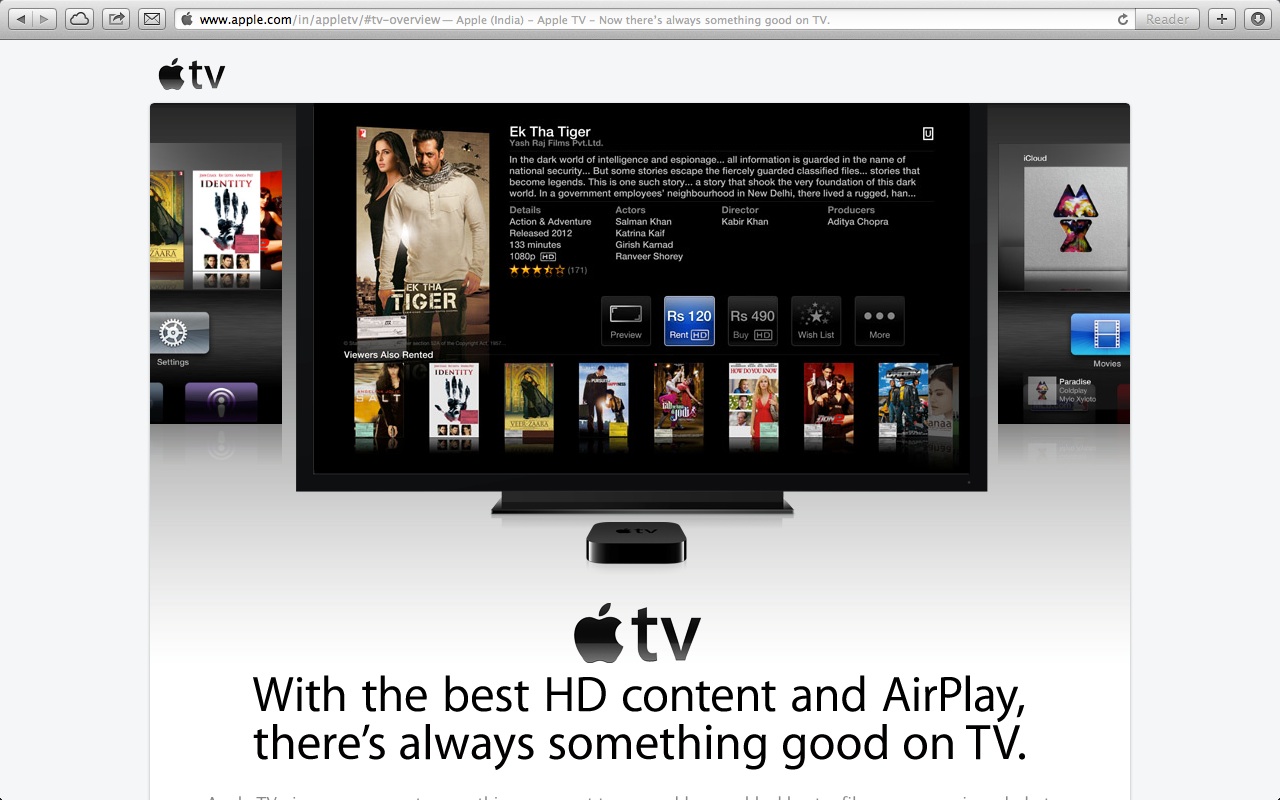
Apple Tv made a silent appearance on the Apple India website yesterday with a price tag of Rs. 7900(Rs.8295- with taxes). Apple has started giving importance to the Indian market since the launch of iPhone 5. The iPhone 5 had sold out within a few hours of its initial launch in India. Apple is now trying to push its Apple Tv in a similar manner hoping to increase its profit. The company had started its groundwork to launch the Apple Tv long back, by adding regional content to the iTunes store. A lot of Bollywood movies and music have been added to the iTunes store. Indian media enthusiasts and Apple fans have been waiting for a long time to get their hands on the Apple TV. The Apple TV has a lot of advanced features like AirPlay mirroring which allows users to mirror a Mac/iPhone/iPad display to a larger screen, iCloud sync which sycs all your media content with multiple devices, Live News and Sports, Video streaming(YouTube,VIMEO) and Internet browsing(via Ethernet and WiFi). I don't think India is a good market for Apple TV since people have adapted themselves to watching movies on television or internet. Watching movies on Apple Tv requires the user to buy/rent it from the iTunes store. Average cost of a movie in iTunes store is Rs. 500 and most people can't afford to pay such an exorbitant amount on a regular basis. The Apple Tv is hence targeted to the elite society. Sales of Apple Tv in India will be considerably low as compared to the sales in other parts of the world.
HTC has finally launched its long awaited flagship Android phone -The HTC One. This phone has been churning the rumour mills for a long time and today, HTC has officially announced the specs by putting an end to all speculations. The phone is said to have an ultra-pixel camera, a 4.7 inch full HD display and ships withAndroid 4.1.2 Jelly Bean. The device will be available by march but the cost still remains undisclosed.
HTC One Specification
DESIGN AND FORM FACTOR
The phone looks sleek, measures 137.4 x 68.2 x 9.3mm and weighs 143g. The screen runs edge to edge without leaving a strand of aluminium visible on the sides. Two identical bars are seen on both the top and bottom of the phone. On the whole, the HTC One offers a fresh design and a premium look and feel. The back panel looks similar to the iPhone 5 with brushed aluminium and rounded edges. The beats audio logo can be found at the back of every HTC phone and The HTC One remains no exception. The build quality is excellent and places itself in the premium category of smartphones. The phone claims to be the first smartphone equipped with front stereo speakers and BoomSound technology. 
DISPLAY AND CAMERA
The One houses a gorgeous full HD display which beams a resolution of 1920 x 1080 pixels with pixel density of 468 PPI. This is same as that of LG Optimus G Pro and HTC’s own Butterfly. Full HD screens have now become a standard feature in mobile phones. The camera technology seems to be the highlight of this phone. Most people are blinded by a wrong assumption that ‘megapixel’ is the determining factor of a camera’s picture quality. Actually, there are a lot of other factors which determine the quality of the image : aperture, ISO, exposure, Dynamic Range, Noise, Lens flare etc… . HTC has decided to break the ‘megapixel myth’ by taking a bold step forward with its new technology called ‘ultrapixel’. The word ‘ultrapixel’ has been going viral on the internet but to some people, it still remains a buzzword. The One’s camera will shoot images in just four megapixels. HTC believes that instead of increasing the number of pixels, if the size of each pixel is increased, it would let in more light and naturally the resolution of pictures would increase. It is the size of pixels that matter and not the number of pixels when the quality of image is considered. HTC has named this new technology ‘ultrapixel’ (as the megapixel era has ended). With this new technology, the HTC One’s camera can capture 300% more light than the cameras in existing phones. The phone also features optical image stabilisation which is found in Lumia 920. The One’s camera also sports other fancy features like Object Removal, Group Retouch, and Sequence Shot photos. A 2MP HD front facing camera is provided with HDR capabilities.
PROCESSOR AND MEMORY
A Qualcomm Snapdragon 600, quad-core processor is buried deep inside the phone which clocks 1.7Ghz. A newer version of HTC SENSE UI is stitched on top of the stock Android Jelly Bean to offer smoother animations and quicker response to gestures. HTC has added a new feature called BlinkFeed with its latest version of SENSE UI that allows users to customise their news feeds and run them live on the homescreen. HTC offers two variants of the phone- 32GB and 64GB, both equipped with a 2GB of RAM. The 1.7 Ghz processor when coupled with a 2GB RAM provides hell a lot of power to run any application/game that currently exists in the market and multitasking can be done with ease – thanks to 4 cores under the hood.
CONNECTIVITY
The phone plays a host to an impressive array connectivity options like 4G LTE, HSPA+, Wifi 802.11 a/ac/b/g/n, Bluetooth 4.0, DLNA and NFC. It is sad to note that the HDMI option is missing, but with MHL cable, larger displays can be connected. A 3.5mm jack with beats audio support is provided at the top.
BATTERY
The phone sports a 2300 mAh battery which is claimed to last a day. The HD display, quad core processor and the ultrapixel camera are sure to reduce the battery life. Details about battery life and charge cycles will be provided once the phone releases.
Here goes the full specification of HTC One:
- Screen Size of 4.7 inch (11.938 cm).
- Display Resolution: 1920x1080
- Display Type: , Super LCD3, Gorilla Glass protection
- CPU: 1.7GHz Quad Core processor
- There is 2 GB RAM.
- It comes with internal memory of 32/64 GB.
- WiFi- Wi-Fi 802.11 a/ac/b/g/n
- Bluetooth: Yes, 4.0
- Primary Camera at the rear: 4mp Ultrapixel
- Front-facing camera- 2.1mp, 1080p video recording
- Out of box, it is loaded with Android 4.1.2 Jelly Bean OS, upgradeable to Android 4.2.2.
- Battery Juice of 2300mAh.
More here: HTC One Full Specification, price
HTC One Price, Release Date
HTC One price has not been disclosed but we expect it to be priced very close to Sony Xperia Z. HTC One release date is also not announced, but the phone is expected soon in markets (over 80 countries globally) beginning March.
HTC One ccomes with Android 4.1.2 OS, but the company is already working on Android 4.2.2 Jelly Bean update and this phone will soon be upgraded to this version once it launches. Apart from the latest flavor of Android OS, we’re getting all new simple yet sophisticated HTC Sense 5.0 with features like HTC BlinkFeed, HTC Zoe, HTC Sense TV and HTC BoomSound. As teased earlier by HTC, this phone has really stood tall on its promises of better camera and sound features. The HTC One’s rivals are LG Optimus G Pro, Sony Xperia Z and Lumia 920. However, the scenario might change when Samsung releases the much awaited Galaxy S4. The phone seems to be future proof and the ultrapixel camera is sure to sweep the market if it makes sense to consumers, but who knows when and how fast the market and the technology changes! Your thoughts in comments!
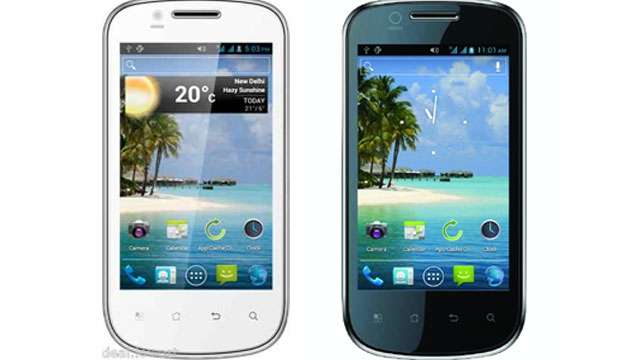
Fancy budget smartphones running the Android operating system are quite common these days. Most people don’t want to shell out lot of money on a smartphone but still want to enjoy the latest features. These phones are just perfect for them as they offer a high end single/dual core processor, 5-12 MP camera with flash, large screen and the latest version of Android operating system on top of it. Key players in this market are Micromax, Karbonn and Lava. Videocon has also been in this market for a long time but often buried down by Micromax or Lava. Videocon has now planned to take down these big guys with the A27 which is a dual sim android smartphone with a 4 inch display. Videocon has priced the A27 at Rs. 5,999.
The phone looks attractive with a brilliant 4 inch screen beaming 480 x 800 pixels and touch sensitive buttons placed at the bottom.The A27 runs on the Android Ice Cream Sandwich. It packs a 1Ghz single core Broadcomm processor coupled with a 512MB RAM. The specifications are standard and the best you could get at this price. The 4GB internal memory is a tad too lowand could call you for a frequent inbox cleanup or removal of applications to free up some space, but given the price and category of budget phones, its not bad either. The memory is expandable up to 32GB using a micro SD card. Graphic intensive games like Temple run and Angry birds might experience lags. However, all other applications should run perfectly on the 1Ghz processor. The 512 MB ram will support you with some extent of multitasking. A 3MP fixed focus camera is provided for capturing photos and a VGA secondary camera for video calling. Other notable features include Bluetooth v3.0 with A2DP support, WiFi 802.11 b/g/n, GPS , Proximity sensor, G sensor and HSDPA. The 1500 mAh battery is sure to last you more than a day. The Videocon A27 may face stiff competition from Karbon A1+, Micromax A25 and Huawei Ascend Y210D which offer the same specifications. The A27 is absolutely a bang for the buck with its wide array of features including the 4 inch screen. But you could also consider the cheaper Huawei Ascend Y210D if you’re satisfied with a 3.5 inch screen and a 2MP camera .
- Screen Size of 4 inch (10.16 cm).
- Display Resolution: 800x480
- Display Type: , capacitive multitouch
- CPU: 1GHz processor
- There is 512mb RAM.
- It comes with internal memory of 4 GB.
- WiFi- Wi-Fi 802.11 a/b/g/n
- Bluetooth: Yes, 3.0
- Primary Camera at the rear: 3 megapixel
- Front-facing camera- 0.3mp VGA
- Out of box, it is loaded with Android 4 Ice Cream Sandwich.
- Battery Juice of 1500mAh.
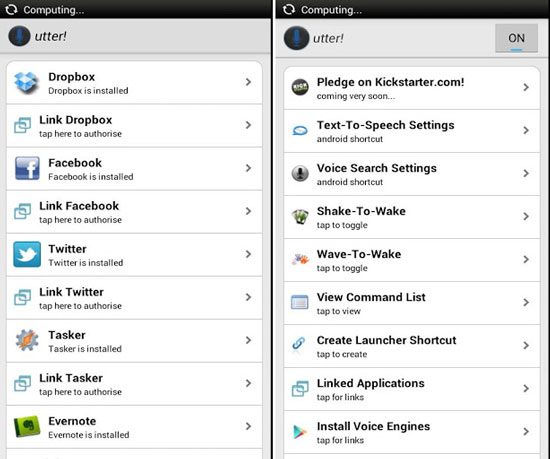
Android Jelly Bean was the first android version to feature offline voice typing. Google had somehow managed to stuff the speech synthesis engine into its operating system. Despite this, Google Now had to connect to the internet to answer your queries. A recent update just made Jelly Bean better by addingoffline voice recognition to Google Now. Google had already released the api to third party developers and Utter! is the first to take advantage of this feature. Utter! is an application which aims to replace Google Voice Search with a lot of other interesting features on board. Although Utter is currently in its Beta stage, it manages to respond well. The User Interface is neat with minimalistic design elements used.
When you open the app for the first time, it guides you through the basics by explaining the features and menu. The main menu offers a list of commands that Utter! can recognise. But you could very well ask the app if you don’t know what to say. Initially, you will have to check if the app is recognizing your slang properly. You can start using it once the app is calibrated to recognize your voice properly. You should tab the notification bar before you start speaking something and once its ready, you’ll see a mic symbol on screen. You can ask Utter! to perform in-phone tasks like toggle wifi,bluetooth,sound,brightness,etc.. or even ask it to post a Facebook status, Foursquare checkin or a Tweet. More than just working with commands, Utter! is also designed to provide audible responses to the user like Apple’s Siri. Ask utter “WHAT IS THE WEATHER ?” and it responds you with the correct weather information in your location. The accuracy is quite good for an app in beta stage. However, Utter! is not designed to respond to complex commands. Siri can execute complex commands like “REMIND ME TO WISH MY MOM HAPPY BIRTHDAY AND BOOK A TABLE FOR TWO AT PERSE ONCE I REACH HOME” Siri tracks your location and alerts you to wish your mom when you reach home and automatically books a table at perse restaurant via OpenTable application. But, Siri needs an active internet connection. Utter! is currently integrated with Facebook, Twitter, Foursquare, Dropbox and Evernote.
Web browser giant- Opera Software acquires Skyfire, a company which deals with cloud solutions and mobile video optimisation for a whooping $155 million (8367287500000 in indian rupees). Opera was once the best mobile web browser, but recently Opera has been losing itself to Chrome and Firefox. iOS users have Chrome as their first choice by ditching the default Safari, as Chrome offers a better user experience. But Opera still finds its place in low-end Java phones. The company plans to increase the functionality of its Android and iOS applications by transforming its native web browsers into WebKits. With the acquisition of Skyfire, developers at Opera will now be able to use Skyfire’sRocket optimisation software to shrink high quality videos and push them over mobile data networks even during high traffic conditions. This is possible by reducing bandwidth consumption and adapting quickly to sudden drops in mobile networks. Opera mobile web browsers will soon gain the power of cloud as the company plans to integrate Skyfire’s cloud servers and applications with its WebKits. Skyfire’s Rocket optimization technology will also increase the responsiveness of Opera’s mobile web browser and solve common issues like minimised audio, stall during buffering, slow buffering speeds , rebuffing and delayed start times while streaming videos online. Skyfire’s Horizon softwarewill also be used by Opera as it allows a lot of scope for personalisation. After a serious analysis, Opera has found that the market for video/media optimisation has a huge potential to woo customers. According to Opera’s reports, by 2015, videos will consume two-thirds of global mobile bandwidth. Opera has planned to take advantage of this and stay ahead in the race by acquiring the leader in this market- Skyfire Labs. Jeffrey Glueck, CEO of Skyfire, will soon take the role of EVP of the Operator Business for Opera, as well as CEO of Skyfire.
Today , Apple has patented the most advanced form of wearable computer which takes the form of a flexible wrist band. Yes, its the iWatch concept that we are talking about. After tons of experiments and testing, the team has finally come up with a design for the iWatch. According to the patent submitted by Apple, the watch will be made out of nano materials which could easily slap on to a wrist of any size, automatically orient the display towards the user using gyro-sensors/accelerometer and resize the screen resolution to match the width and curvature of the wrist. The device will use flexible multi touch displays on top which can help users perform tasks like reordering playlist, viewing call logs and replying to messages using a simple virtual keyboard. Apart from these, the patent further states that the latest connectivity standards like Wifi 802.11 a/ac/b/g/n and Bluetooth 4.0 with A2DP will be adopted to sync with the iPhone. The iWatch will also have an option to perform a wired sync via cables. Apple states that a 5Ghz high speed bandwidth connection established between the iWatch and the iPhone will be sufficient enough to stream high quality videos. A secure protocol will be used to establish the connection in order to prevent unauthorised access to data.
The patent also mentions a lot of other interesting uses of the iWatch :
- Map viewing – A traveller can quickly view the map with a simple swipe gesture on his wrist without having to take his phone from the pocket or even hold a device.
- Fancy edge lighting – The user can customise the colour of the watch by changing the edge lighting and even control the blink rate to show a warning sign to someone. The watch also allows users to customise the screen to display anything like a colour band, moving text, Barcode/QR-code/id to scan while entering a secure area, etc….
- Night time security- Users could leave the watch switched on with a particular colour or a bright pattern running around the screen and strap it on their wrists or legs. This would be helpful to people who have the habit of cycling or running during the night as it would provide increased visibility to the vehicles on road.
The device can be charged via kinetic energy, solar energy and wired connectors. However, Apple hasn’t given a clue about the battery technology used in the iWatch. Being a flexible device which could bend over any curved surface, the battery must be distributed throughout the device.
Apple iWatch Release Date
Before Apple could release the iWatch for commercial use, developers will be given a sneak peek into the device and WWDC 2013 appears to be the right time for a demo. The iWatch rumours have been taking many shapes during the recent times and this patent has put an end to all speculations. It also proved that Apple is serious about the iWatch and it is not a fake project anymore. Apple has just filed a patent and has no plans to start mass production now as engineers are still experimenting on different iWatch models. So lets wait to see what’s in store (and yeah, the name – iWatch – may not be the real name of this prospective product when it is released commercially. Apple might coin something different as the name of this product).
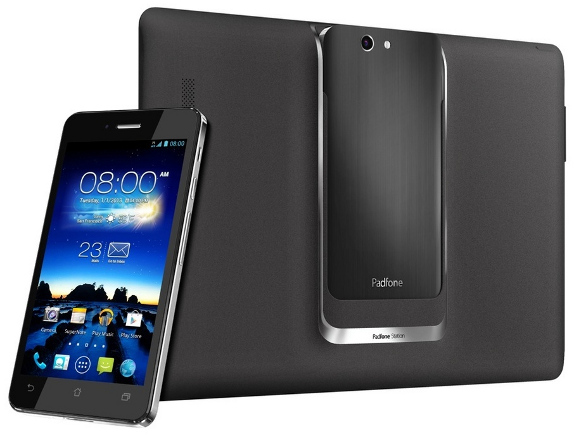
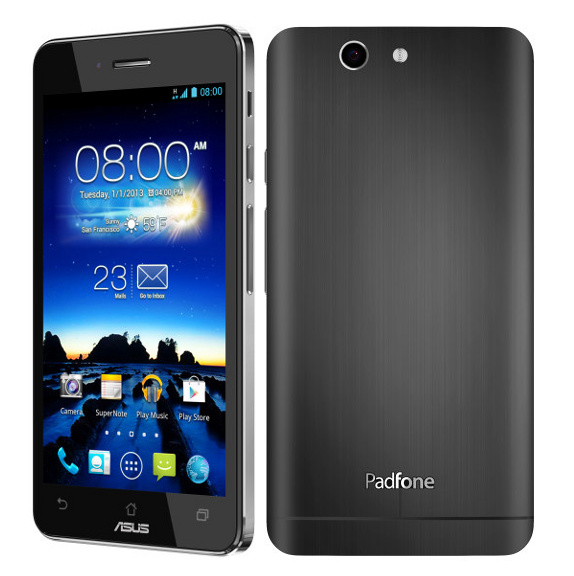
ASUS has launched the Padfone infinity at its MWC special event today. The Padfone infinity is a successor to Padfone 2 which was launched a few months back. As we have entered the post PC era, the tablet market has been given much importance and manufacturers have already come up with a lot of innovative ideas like phone-tablet hybrid(phablet), Tablet-Laptop hybrid and so on. But ASUS has come up with a completely new idea – A phone which can be converted to a tablet by docking it to a larger display. Yes, the Padfone infinity is basically a phone that can be converted to a tablet by docking it to a larger 10.1 inch display which also ships with the phone.
Asus Padfone Infinity Specification
The Padfone infinity looks stylishly luxurious with a full metal body and a brushed-aluminium back. There’s a gorgeous 5-inch full HD(1920×1080 pixels) screen on the front which boasts a pixel density of 441 ppi. There are three touch sensitive buttons at the bottom and the ASUS logo below it. It gives you a taste of Android Jelly bean with some flavours of ASUS’ User Interface toppings. The device sports a winning combination of powerful 1.7Ghz Quad Core Snapdragon 600 processor coupled with Adreno 320 graphic processor and 2GB of RAM. There’s 64GB of memory on board which is not expandable. The 13MP autofocus camera with LED flash captures vivid pictures of 4128 x 3096 pixels resolution and smooth 1080p videos at 30fps(720p videos at 60fps). The camera houses a f2.0 aperture lens and 5-element optic system to deliver high quality pictures and videos. A 2MP fron facing camera is provided for video calls. Connectivity options include HSPA+, HSDPA, NFC, Bluetooth 4.0 with A2DP, Wifi(802.11 a/ac/b/g/n) and micro USB. The 10.1 inch Padfone station dock with a full HD screen and anti finger print coating also comes with the same metallic design and brushed-aluminium back to perfectly match the Padfone infinity. A 2000mAh battery is provided with the phone and a 5000mAh battery is provided with the Padfone station which accounts to 7000mAh of raw power available for direct consumption.
- Screen Size of 5 inch (12.7 cm).
- Display Resolution: 1920x1080
- Display Type: , IPS display, multitouch, Gorilla Glass Protection
- CPU: 1.7GHz Quad Core processor
- There is 2 GB RAM.
- It comes with internal memory of 32/64 GB.
- WiFi- Wi-Fi 802.11 a/ac/b/g/n
- Bluetooth: Yes, 4.0
- Primary Camera at the rear: 13 megapixel
- Front-facing camera- 2mp, 1080p @ 30fps video recording
- Out of box, it is loaded with Android 4.2 Jelly Bean OS.
- Battery Juice of 2400mAh.
Asus Padfone Infinity Price, Release Date
The Asus Padfone Infinity is priced at $1325 and would go on sale from April 2013. At this price range, this tablet cum phone hybrid might look expernsive, but Asus Padfone has always been a premium product from Asus and Asus has had success with this hybrid product of theirs and this keeps them on roll to launch further generations of this unique gadget. The release date of Asus Padfone Infinity in India is not revealed as of now, but like the previous generation of this hybrid phone cum tablet, it’ll be released shortly after its international launch, and do I need to say that it’ll cost hefty premium amount!
Subscribe to:
Comments (Atom)